Recursive Creation of Virtual Ports - AutoConnect to New Ports

I am trying to use Bome in a very simple way: Connect 14 ports (16 midi channels each) to VEpro Standalone from Logic on a Mac to a PC.

I need the port names on the Mac to be retained (‘Network 1’, ‘Network 2’, etc) because I need to be able to switch between projects and have the port assignments retained in complex large songs.

On the PC side, I need the ports also to be simple, but they have to have a letter assigned at the beginning. So ‘A Network 1’, ‘B Network 2’ etc. I then would route the incoming ‘Network 1 Virtual In’ from the Mac to the PC.

In VEpro and Bidule, I need to only to see the virtual ports I have created. I cannot seem to stop Bome from creating new ones.

I have literally spent 2 full days tearing my hair out to do what I thought was a fairly simple operation, but I cannot get it to behave and the routing window gets very messy. I have tried everything I can to uninstall and reinstall and update and start from a clean slate, but no matter what I do, Bome always remembers the last state. God knows where it stores that information but it has defied my attempts to delete.

What happens is each iteration I get ‘Virtual Virtual In’ as well. It’s pretty messy.

Is there any way to stop Bome from creating these virtual ports automatically?
Hi and welcome to the Bome community!

If port names on both systems are indeed important, you will need to create virtual ports on you Mac. Instead or 14, my example is with just 2. You can apply the same logic to the other 12.

On Mac, create your virtual ports, Network 1, and Network2
On PC, create your virtual ports A-Network 1 and B-Network 2

On Mac click on your connection to your PC and turn on the switches for A-Network 1 Virtual and B-Network 2 Virtual

This auto creates additional routes on your Mac which you must disable by unchecking

IN: From MyPC:A-Network 1 Virtual → OUT:MyPC:A-Network 1 Virtual

IN: From MyPC:B-Network 2 Virtual → OUT:MyPC:B-Network 2 Virtual

IN: MyPC:A-Network 1 Virtual Virtual In → OUT: To MyPC:A-Network 1 Virtual

IN: MyPC:B-Network 2 Virtual Virtual In → OUT: To MyPC:B-Network 2 Virtual

Then on your Mac add the following routes:

IN: Network1 Virtual In → OUT: To MyPC:A-Network 1 Virtual

IN: Network2 Virtual In → OUT: To MyPC:B-Network 2 Virtual

Now the two ports from your Mac will send to your PC as shown in the last two routes.

The Virtual Virtual ports are essentially additional ports created by Remote Direct MIDI to expose a physical virtual port on a given machine to a new virtual port between machines. I know this is confusing but that is the only way one machines virtual ports can see the other machine’s virtual ports.

So for every port that has Remote Direct MIDI selection, the 4 additional routes are automatically added.

I hope this makes sense.

Steve Caldwell
Bome Customer Care
Also available for paid consulting services: bome@sniz.biz

Thank you very much for your quick reply. I really appreciate it. I have had 2 full days of hair tearing here.

Per your description is exactly what I have done. I have 2 separate issues and I will make a separate thread for the 2nd. The first is auto-creation of virtual ports, and the second is I am unable to purge the system of Bome information in order to do a vanilla install.

On the Mac side, I have created the virtual ports (‘Network 1’, ‘Network 2’…).

However, when the PC boots up it creates its own virtual port - AC1VEPC. I need it to NOT do that. That’s very important.

On the PC side, every time the system is restarted, it autocreates virtual ports from the Mac. That then populates and messes up the port assignments in my DAW applications on the PC.

On the Mac, virtual ports are created by me, and everything else is turned off. In ‘Direct Ports’, the ports have been turned on, so that the midi can be transmitted to the PC. On the PC, the virtual ports are created and then the ports from the Mac are routed to them. Everything else is turned off. After restarting this is what I see in VEpro:

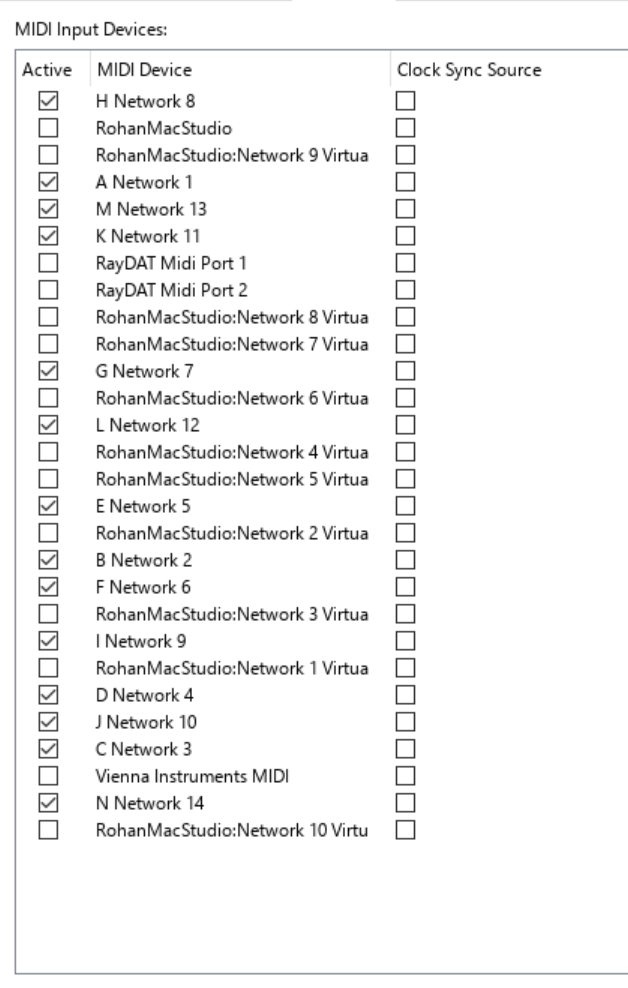
It will not retain the state I need the ports to be displayed on the system. The reason I bought Bome is because Network Midi/rtpMIDI had the same problem. It is in part a quirk with Vienna but for a long time I had things more or less stable. Recently I have been having crashes in Logic because autosave was conflicting with Bome causing thread 0 to crash. The remedy involved renaming the computers and after I was having problems with Bome I thought I would upgrade. My next step now is to downgrade to 1.6 and hope the auto-create disappears.

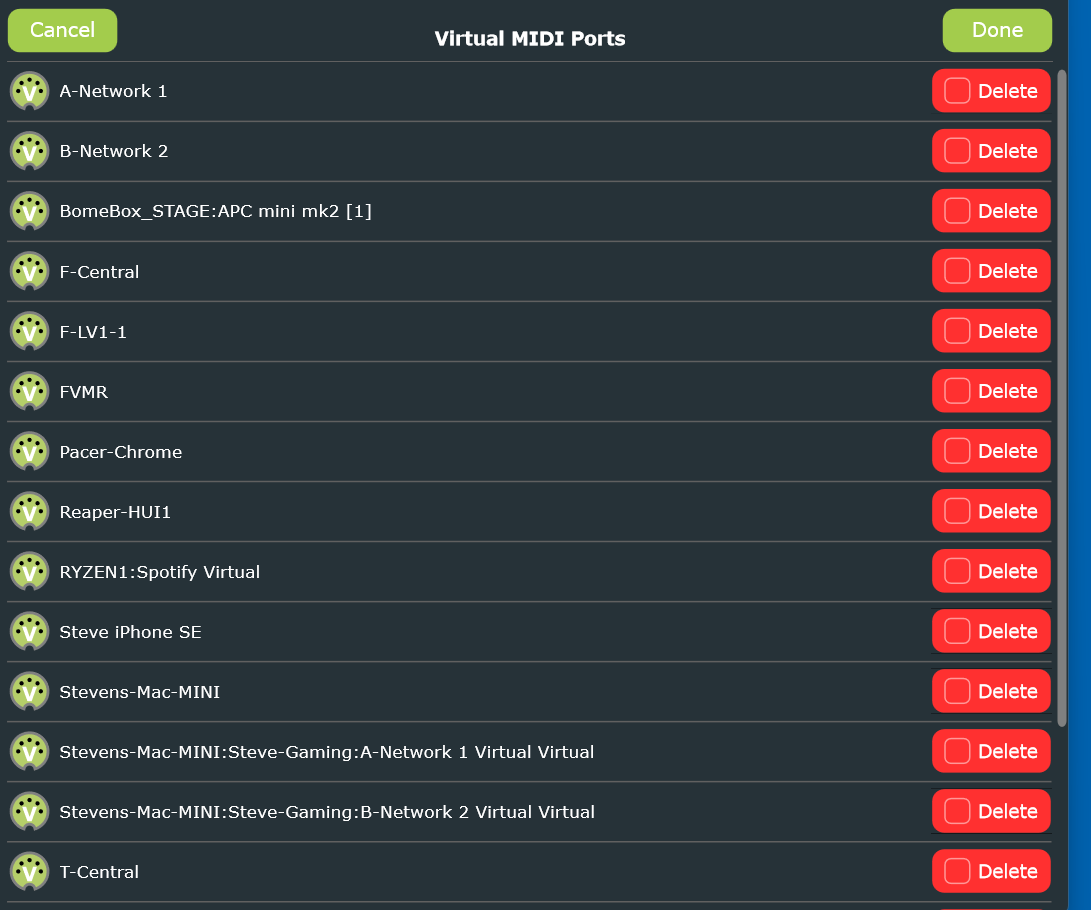
Additionally, after deleting the virtual ports in Bome, I’m treated to the message that there are virtual ports that are unassigned. Of course they are, I just deleted them. I don’t want them appearing on my system.

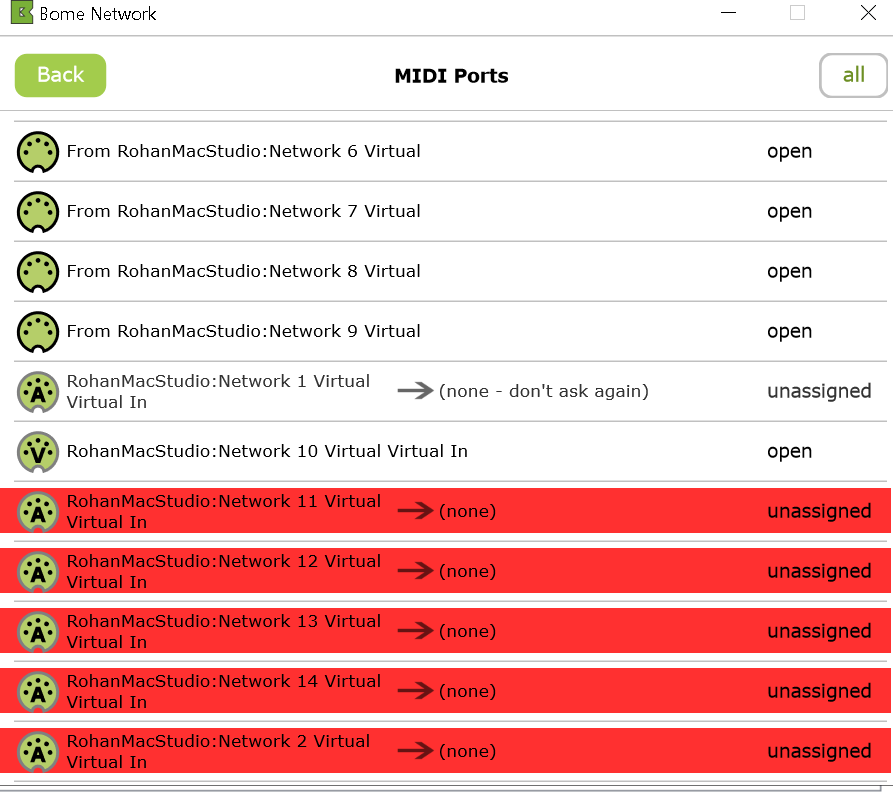
Additionally, on the front panel of Bome I have a random selection of ports showing up:

They do not correspond to anything that I can see. On the Mac side, all of those ports are open. I don’t know why I should see those there or why I cannot see all of them, or why there is a random selection.

After this post, I am going to uninstall 1.7 and reinstall 1.61 and see whether that resolves the auto-create problem. I’d be grateful for any light you can shed on this.

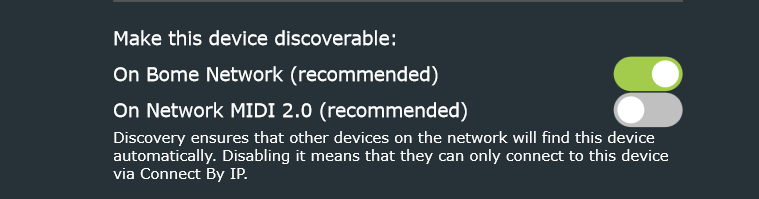
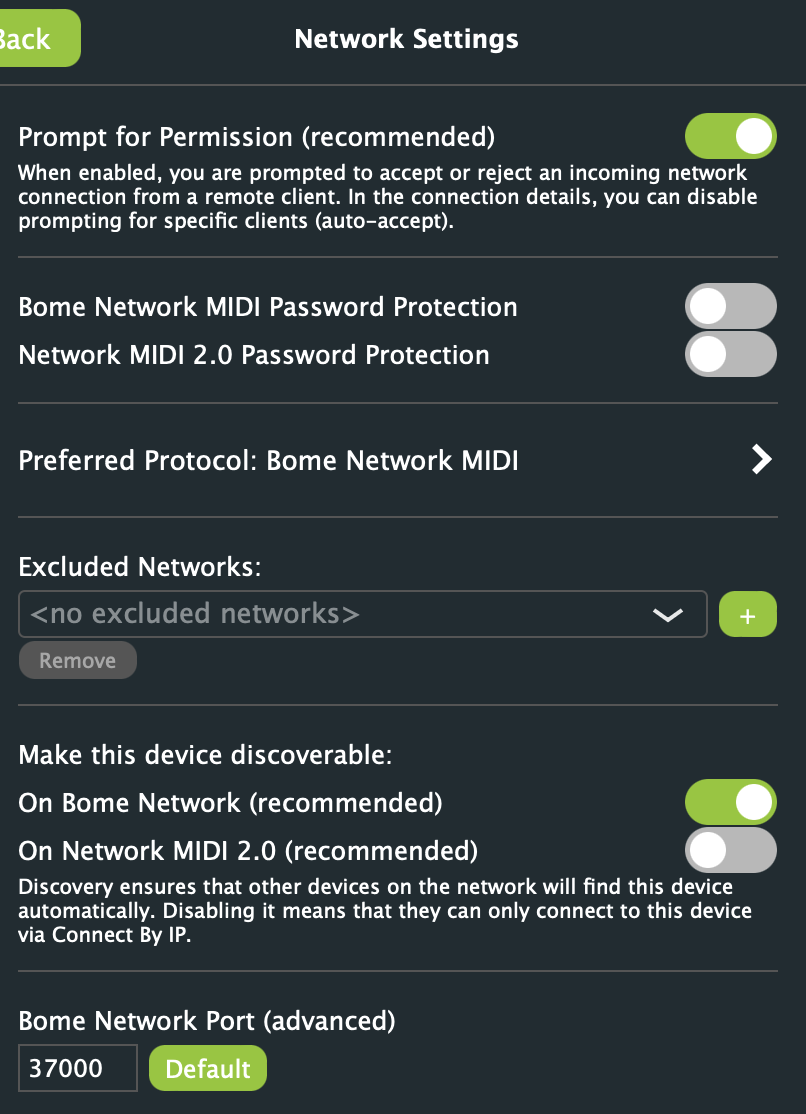
OK, looking at the screenshots I see that you are using MIDI2 connections instead of Bome Network native connections. First of all, make sure you set up your preferred connection time to Bome Instead of MIDI 2. In Settings (Gear ICON) go to Networks settings and and make it like this. This will make the preferred connection as Bome MIDI instead of MIDI 2.0 which acts quite a bit differently. Do this on each machine. Then make sure you click "Forget on any MIDI 2 Network connections on the main screen,

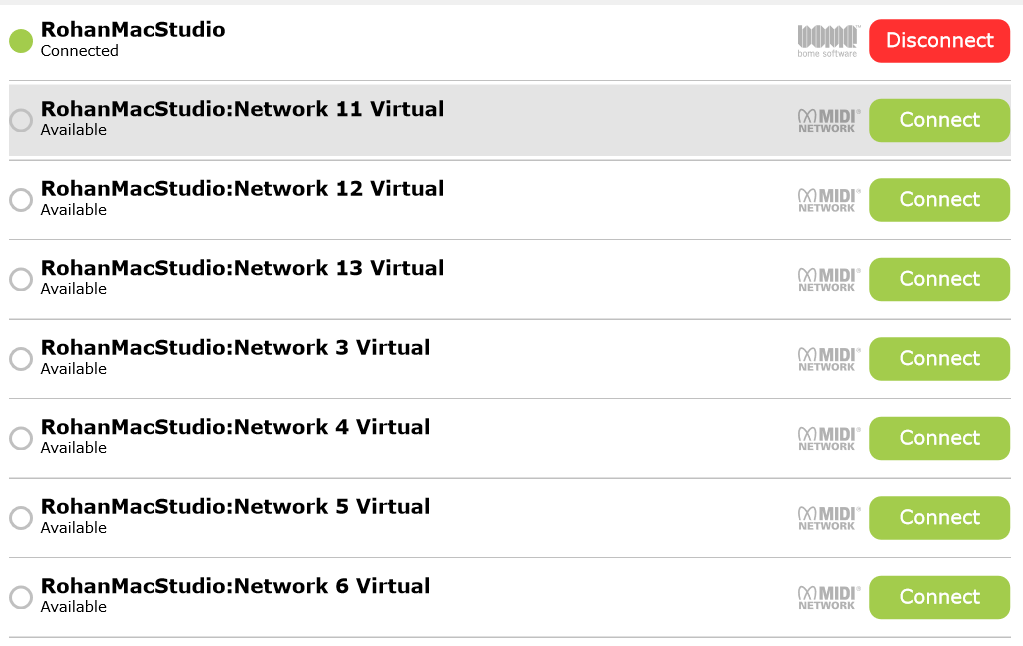
This is what a MIDI 2.0 connection looks like:

image

And this is what a Bome Network connection looks like:

image

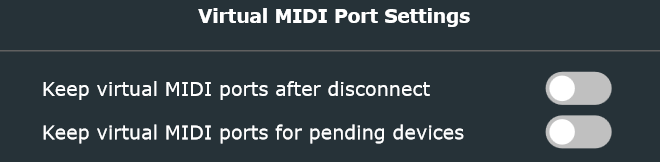
Then go to the setting again (gear ICON ) and select Virtual Port settings.

Turn off these switches. This will ensure virtual ports disappear when disconnecting and then they should re-appear when they are present, Again, turn these off on both machines.

Hopefully I addressed your first issue above. If not, you might need to remove the re-appeared ports in the Virtual MIDI port Menu. by clicking edit and then delete for any that you don’t want.

If they show up again, you may need to shut down Bome Network, then delete the settings file, and then restart Bome Network. If you do this you may need to redo some of the settings I showed above as when the settings file is gone, then Bome Network will create a new one with the default settings.

The location of the settings files are described in this post.

With Bome Network instead of MIDI 2.0 connections, the other non-virtual ports should no longer show up at all.

Bome Network Version 1.7 is the first version that has MIDI 2.0 connection type so indeed you should see different behavior on 1.61. I will suggest that the default preferred connection type excludes MIDI 2.0. This will make it easier for users that are upgrading from 1.61. With that said, there are some features that I like about the MIDI 2.0 connections and that will help make things future proof when we start seeing MIDI 2.0 devices and applications.

Steve Caldwell
Bome Customer Care
Also available for paid consulting services: bome@sniz.biz

Oh and on any unassigned ports, there is a selection for (none - don’t ask again)

Thank you again for your response.

So the issue might be some sort of confusion between Bome Network and Midi 2.0?

Currently my resolution is as follows:

  • I have removed Bome entirely from the PC
  • The Mac has been downgraded to Bome 1.6
  • I have set up virtual ports in Bome on the Mac, and…
  • I have set up ports on Network Midi (apple)
  • In Bome I have routed the Bome virtual ports to the network midi
  • On the PC, the ports are setup in rtpMIDI, and receive the midi from Network MIDI

The problem initially with MIDI on the PC side and why I bought Bome in the first place is because of naming ports in VEpro. It turns out that VEpro will reorder the ports if any new ports are created, and possibly may still do unless the ports are in alphabetical order. Also I was continually having issues with re-connecting the Network MIDI to the PC, and given I use a LOT of ports that was a hassle. All I really wanted was the old MoL functionality - set and forget.

I am a pretty experienced user but this has been an absolute nightmare. I just wonder if the UI nomenclature in Bome couldn’t be improved so that it was obvious what ‘IN’ and ‘OUT’ referred to. IN to what? Going OUT to where? Coming OUT of what?

Never-the-less, thank you for your help here. I am going to try your suggestions but I think it might be safer to stay with 1.6 for now. I will revert back to my current resolution if it doesn’t work and I will report back here.

Ok, so I am attempting to go back to a all-Bome set up using 1.6.

The Mac and PC are connected, and both are creating virtual ports in the virtual ports window.

Logic is outputting to the Bome virtual ports fine, and I can see midi being sent to it via Midi Monitor in spy mode.

However, no midi is reaching the PC. I have ports set up, and unfortunately a virtual port is created in the list during the connection. I hope that doesn’t upset VEpro.

The previous set up using Logic Bome → Network Midi → PC rtpMIDI → VEpro was working. I have restarted both machines.

I have Direct MIDI turned off. If I turn it ON then it creates the dreaded virtual port in Virtual Ports. But I am not getting any midi to the PC.

So I am stuck again.

The location of the settings files are described in this post

WRT trying to purge the system of Bome info for a vanilla install, I have indeed many many times deleted those .bmt files on both systems, but the system is still remembering. Not even installing completely is removing it - when I reinstall the settings come back. This is one of the things that has had me tearing my hair out.

Some notes about the virtual MIDI ports:

  • Microsoft has implemented an entirely new MIDI subsystem (‘Windows MIDI Services’) since March 2026, and there are still some rough edges, especially with virtual MIDI ports. Once installed, however, the Bome virtual MIDI ports work fine. Use Steve’s suggested virtual port settings so that they don’t get removed.
  • Bome Network 1.6 and 1.7 both use the exact same version of the virtual ports. I really suggest using 1.7. There are many small improvements.
  • for a ‘vanilla’ install, do this:
  1. In Bome Network, disconnect all. Then in Virtual MIDI, remove all virtual ports.
  2. Uninstall Bome Network
  3. Remove all .bmts settings files
  4. Uninstall the virtual driver (Windows Settings → Add or Remove Programs → Bome Virtual MIDI
  5. Install Bome Network 1.7 → Custom Install → check ‘Force reinstalling the virtual MIDI driver…’

Because the virtual MIDI ports are an actual driver, the installed ports are remembered deep inside Windows. You should only remove them using the Virtual MIDI page in Bome Nertwork.

Other than that, Bome Network exclusively uses the .bmts file for its settings (and the backups in the same folder). Shutting down BN (right-click on tray icon, ‘Exit’) , then removing all .bmts files will get you a completely fresh Bome Network install.

Is there anything else that you think should be reset?

Hi there and thank you very much for your quick reply and help.

Your points 1-5 is exactly the steps I took. I was unable to clear the settings and I am extremely puzzled as to why. Both on the Mac AND the PC.

For now, I have installed 1.6 and I am unable to get it to work. The Mac and PC are connected, but I am unable to get midi to be received by the PC unless I turn on direct midi, which obviously I need to not do.

Network MIDI/rtpMIDI is working fine.

For the sake of staying on the same page as you guys, I will re-install 1.7 and try and get these settings absolutely exact.

Ok, I have re-installed 1.7 on both computers. I am still not getting any MIDI.

Is there something that should be set up in routing?

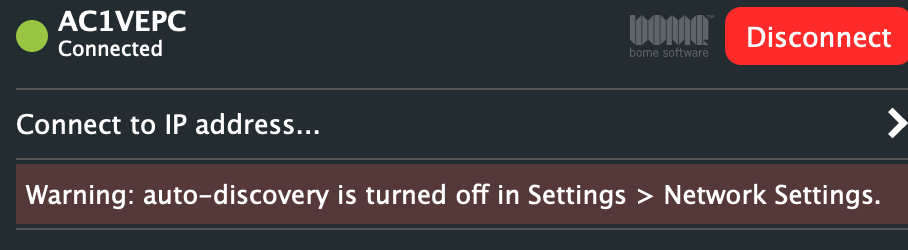
Incidentally I am getting a warning that auto-discovery is off, but it is not (at least I don’t think so):

I cannot see anything in the midi routing panel that would link the Virtual port names on the Mac to the Virtual Port names on the PC.

Hi,

Of course Discovery is turned of on Network MIDI 2.0 which is why you are getting this message. Make sure you are only enabling Bome Network MIDI in Preferred Protocol.
Although when I did this, the message still appears. Maybe the message should be suppressed if MIDI 2.0 is not included in the preferred protocol and discovery is turned off on MIDI 2.0. Otherwise, this messages can be safely ignored if the Bome Network Protocol is enabled and discovery is turned on for that.

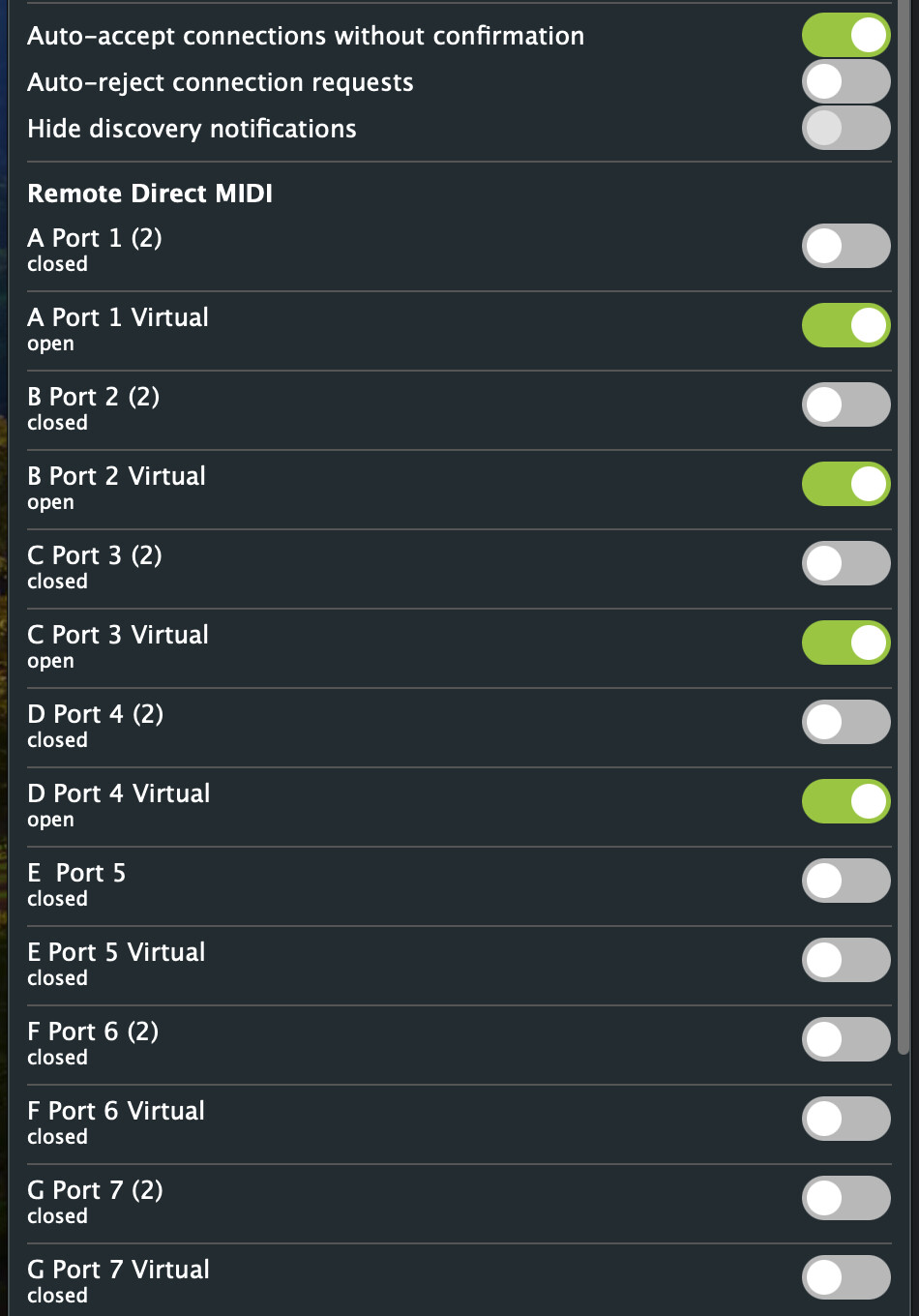
In order to see the names of the Windows PC you must use Remote Direct MIDI, on you Mac. Turn the desired Windows PC ports on using the green switches.

Don’t confuse Remote Direct MIDI with MIDI Direct. Remote Direct MIDI will have the Mac, expose the PC ports remotely and is used with Bome Network Protocol. MIDI Direct is a new feature used in MIDI 2.0 protocol only allowing the a machine to expose a given local port to the network where any machine on the network should be able to see that port when connected.

After turning on Remote Direct MIDI, you should then be able to create the routes as I suggested in my first response.

Steve Caldwell
Bome Customer Care
Also available for paid consulting services: bome@sniz.biz

Don’t confuse Remote Direct MIDI with MIDI Direct.

LOL. Well, you can see how I might.

In any case, I am still getting unwanted/dangerous behaviour. Or I am still confused as to what I am supposed to be turning on.

I turn on these in Bome:

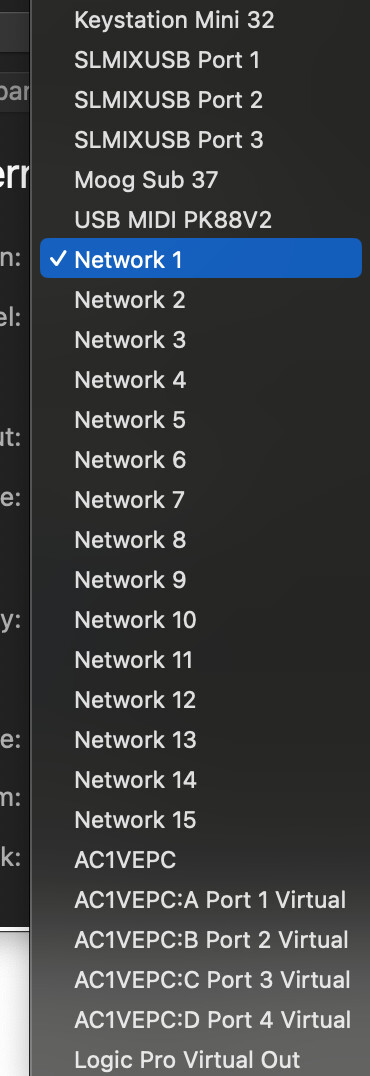
And I get this in Logic:

I get these unwanted virtual ports at the bottom. It’s messy, but I could live with it provided it doesn’t disturb other ports I might have going on for different kinds of projects. I don’t ALWAYS use use the PC. Sometimes I have setups using a fair bit of IAC, or a lot of hardware synths.

So after a bit of trial and error, it seems I want ‘To AC1VEPC: A Port 1 Virtual’.

So which should I choose if I don’t want the virtual ports to show in Logic?

Thanks for the help btw…I have managed to get the midi to the PC now. It’s most appreciated.

Any ports exposed from Remote Direct MIDI will be exposed to all applications in Logic (and any other MIDI program), so it is best just to uncheck the use of these ports within the application (Logic) itselft.

I find it strange that you have additional ports like A Port 1 (2) and B Port 1 (2). It seems that these might be left over from a previous config so it is important that you follow Florian’s instruction to delete any BMIDI ports, close Bome Network, delete .bmts files etc.

Make sure you have routes as follows on your Mac:

IN: Network 1 → OUT: AC1VEPC:A Port1 Virtual

IN: Network 2 → OUT: AC1VEPC:B Port2 Virtual

This will ensure communication from Logic on your Mac to the ports on your PC.

Steve Caldwell
Bome Customer Care
Also available for paid consulting services: bome@sniz.biz

Thanks again.

It’s these kinds of gremlins that increase the confusion. For a while there one of the ports wasn’t working until I realised I had assigned it to ‘Virtual Virtual’.

It is not possible to uncheck the unwanted ports in Logic. You can choose midi inputs for Logic to ignore but not Midi outputs. My worry is that when I am using Logic in different configurations these ports will mess up the assignments in Logic.

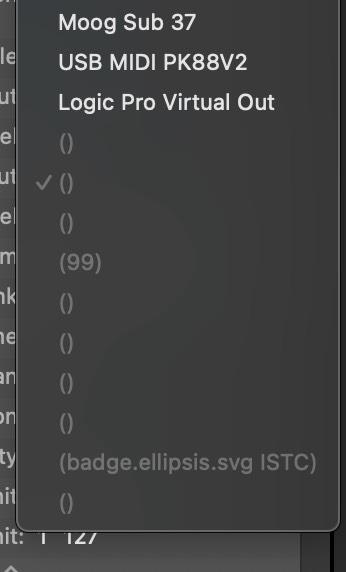
I was prompted to do all of this because of a series of crashes, not related to midi or Bome, but to do with some corruption in the graphics for its score editor. It causes hard crashes and completely scrambles the midi ports. Initially it was thought that it was a clash between midi over the network and autosave, but it is not. But the problem with getting the original port assignments back I think might be to do with the extra virtual ports being created. I am pretty sure I did not have these ports visible in Logic before:

Hi, this is very strange. Could you show a snapshot of Bome Network on your Mac?

Specifically these pages

Ports

Virtual

Router

Also on you Mac in MIDI the MIDI setup (MIDI Studio) utility, show me if you have any other ports defined.

I generally leave mine blank, but maybe you have defined additional ports there. If so, you should delete them more use a different profile.

If you open Bome MIDI Translator Pro on your Mac, (even the trial version) what do you see for inputs and outputs?

Steve Caldwell
Bome Customer Care
Also available for paid consulting services: bome@sniz.biz

N.B.

I do NOT believe that the problem with the crashes are because of Bome or because of MIDI generally. There is bug in Logic’s score editor that is corrupting the projects and crashing Thread 0 which and corrupting the midi ports which is then saved to the autosave.

My concern is when switching different configurations, the ports will get messed up if virtual ports are created in Logic that are not intended to be there.

Additional ports in Audio Nidi setup are IAC busses 1-5.

I do not have Bome MIDI Translator Pro on the Mac.

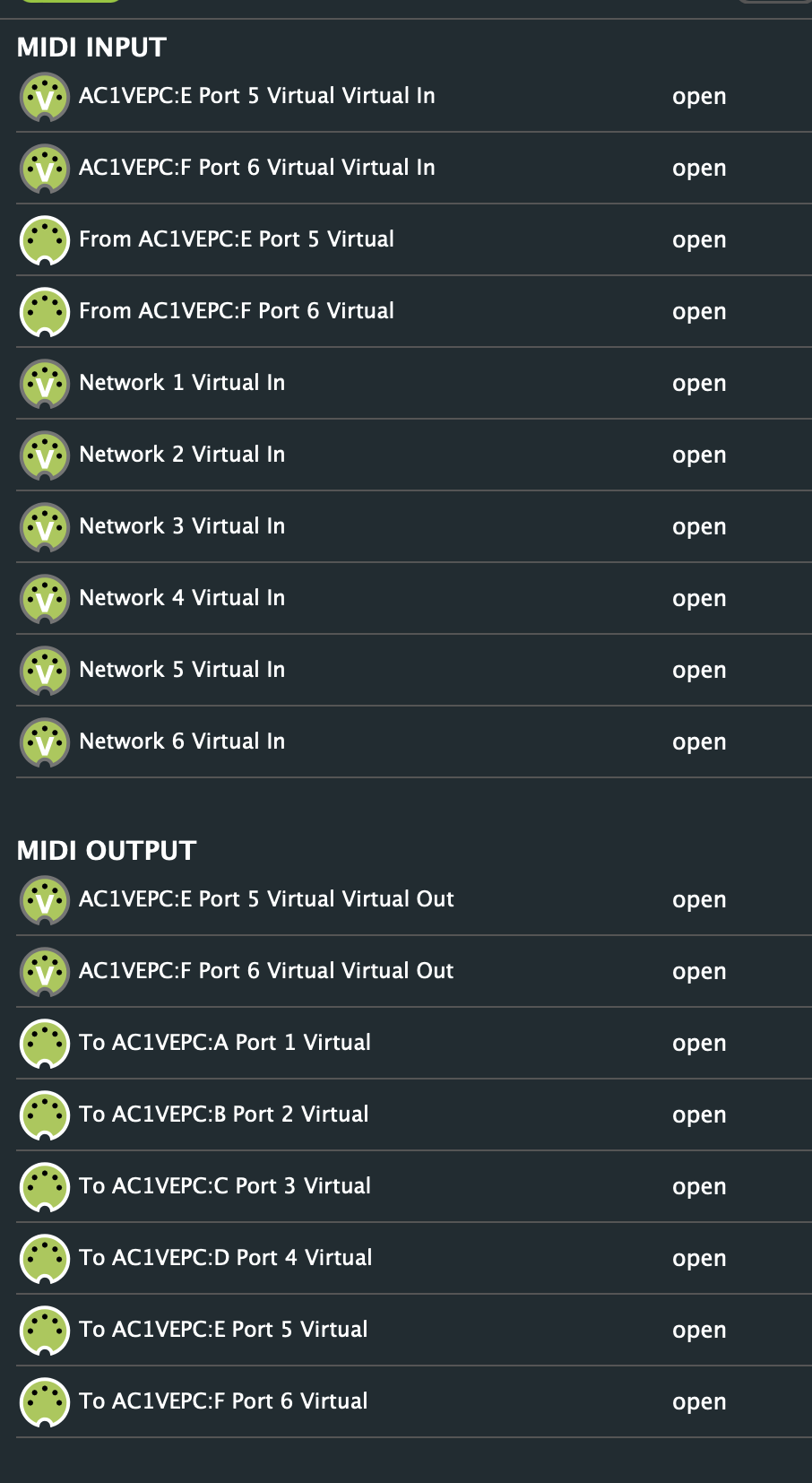
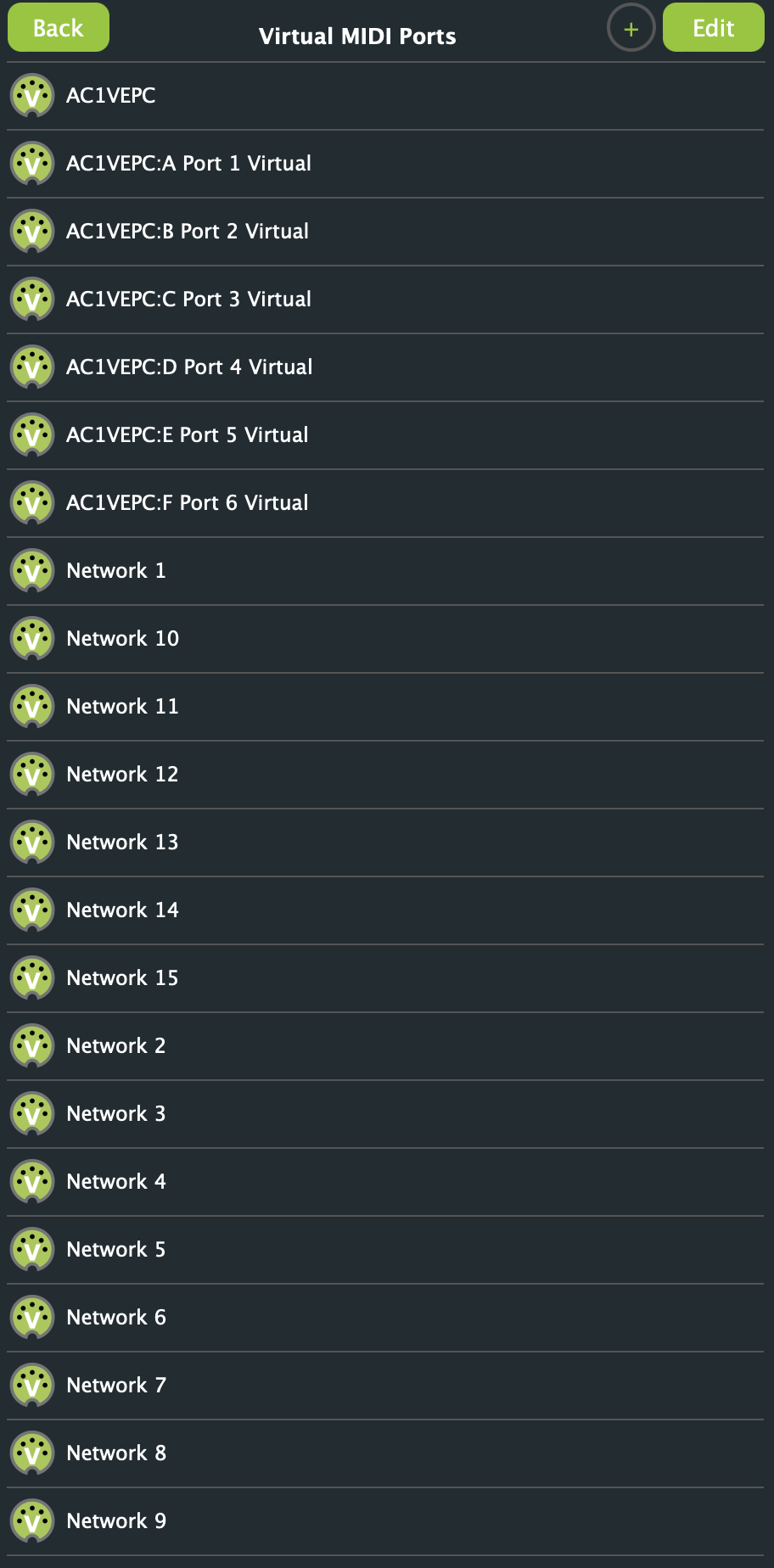
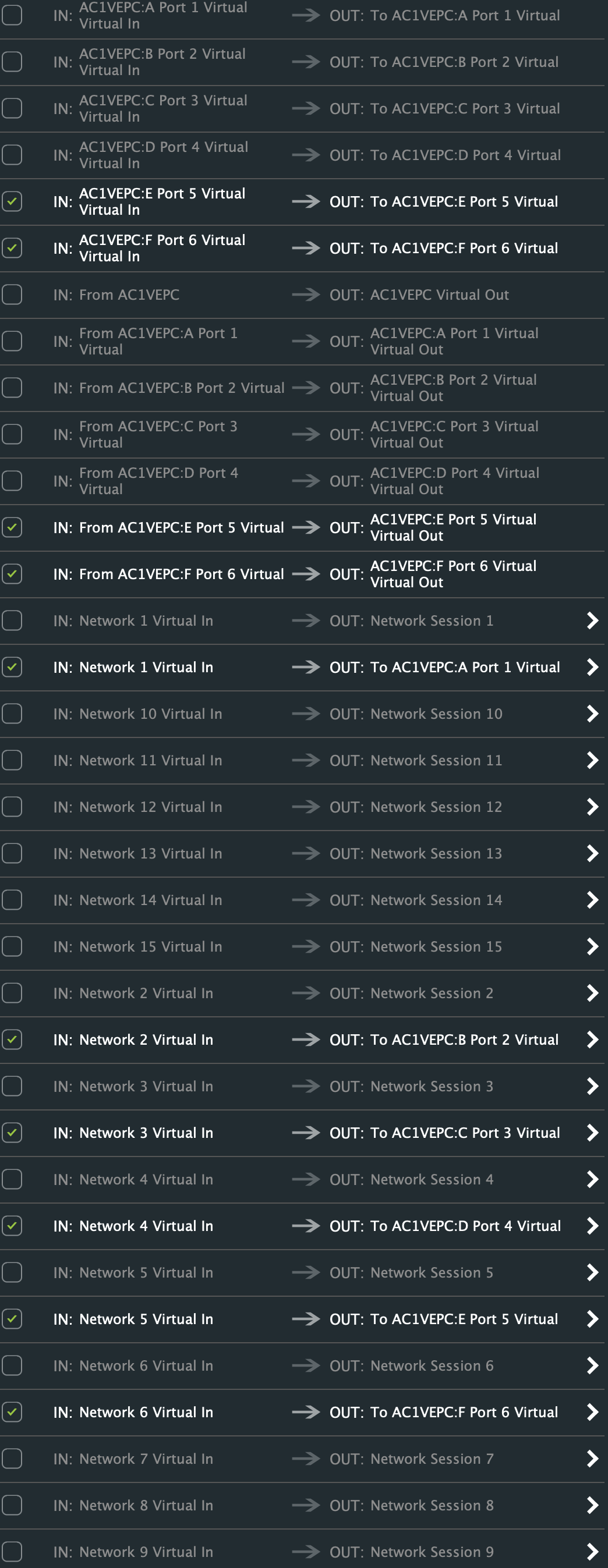
Here are the requested screen shots. It’s very messy which I don’t like. I have left the Network → Session routings viable but deactivated because I wasn’t sure what was going to work best. So long as I can get rid of the AC1VEPC ports in Logic I can live with that since I shouldn’t need to fettle too much once everything has settled down.

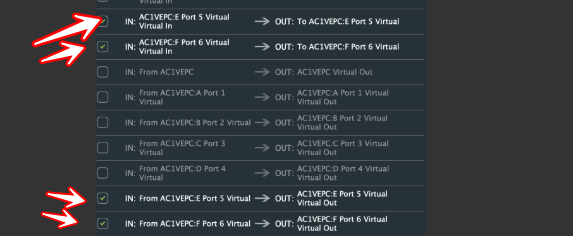
I would uncheck these automatically created routes (indicated by the arrows)

For Logic Pro, I suggest you just make sure there are no MIDI tracks using MIDI OUT port. I think you can set it to an unused port that goes nowhere or just select ‘None’. At least that is what Gemini (AI) recommends.

Again, all MIDI ports on your system will be available to any MIDI apps. You can control where you send MIDI messages by the router or disabling input on the receiving application. For sending MIDI, just make sure, the application only sends MIDI to the desired ports. You do that either through tracks output or if it is a control surface, defining the ports your control surface uses.

Steve Caldwell
Bome Customer Care
Also available for paid consulting services: bome@sniz.biz

Ah yes - I normally turn these off, but I have been creating, deleting, uninstalling, reinstalling so many times I forgot last time.

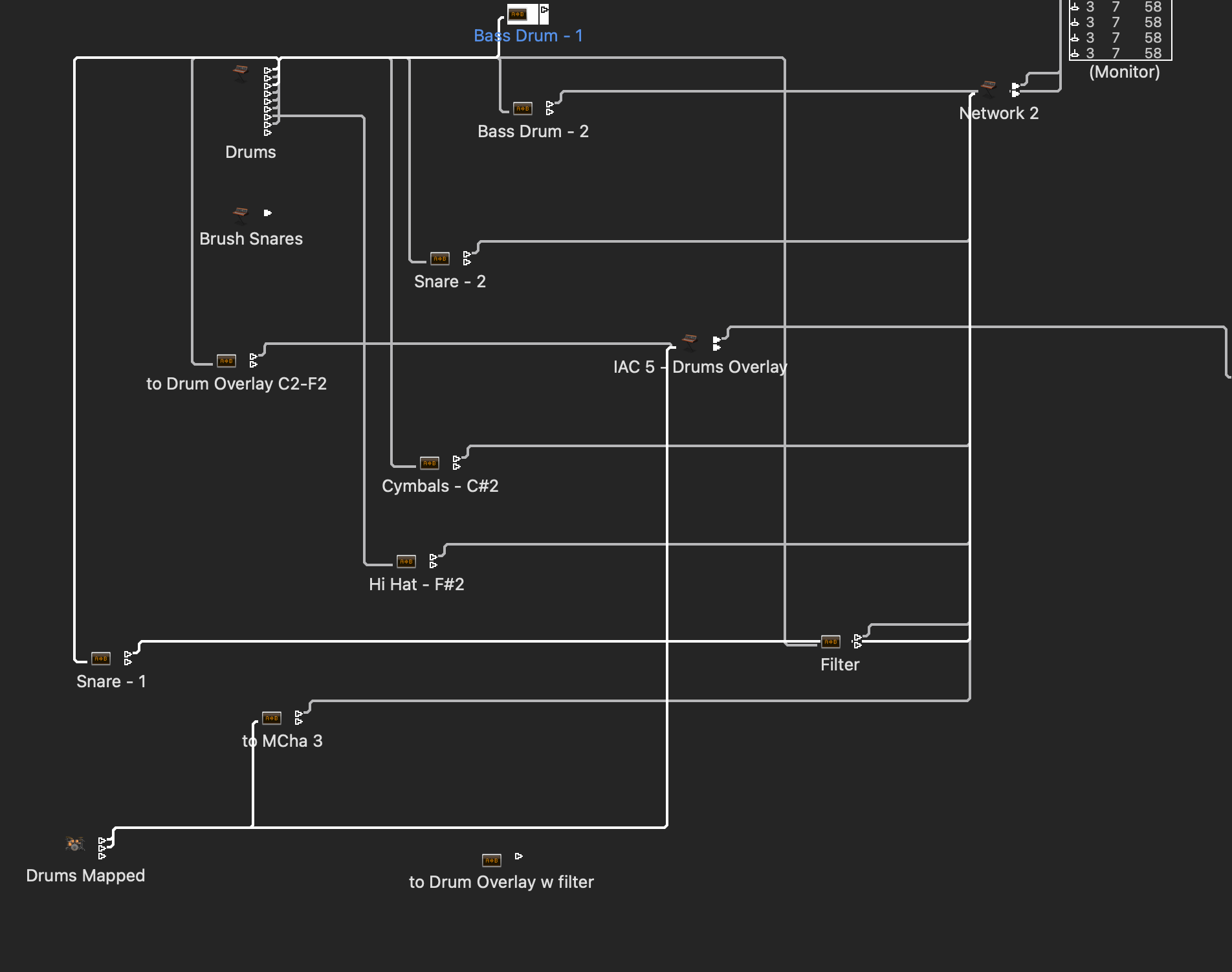
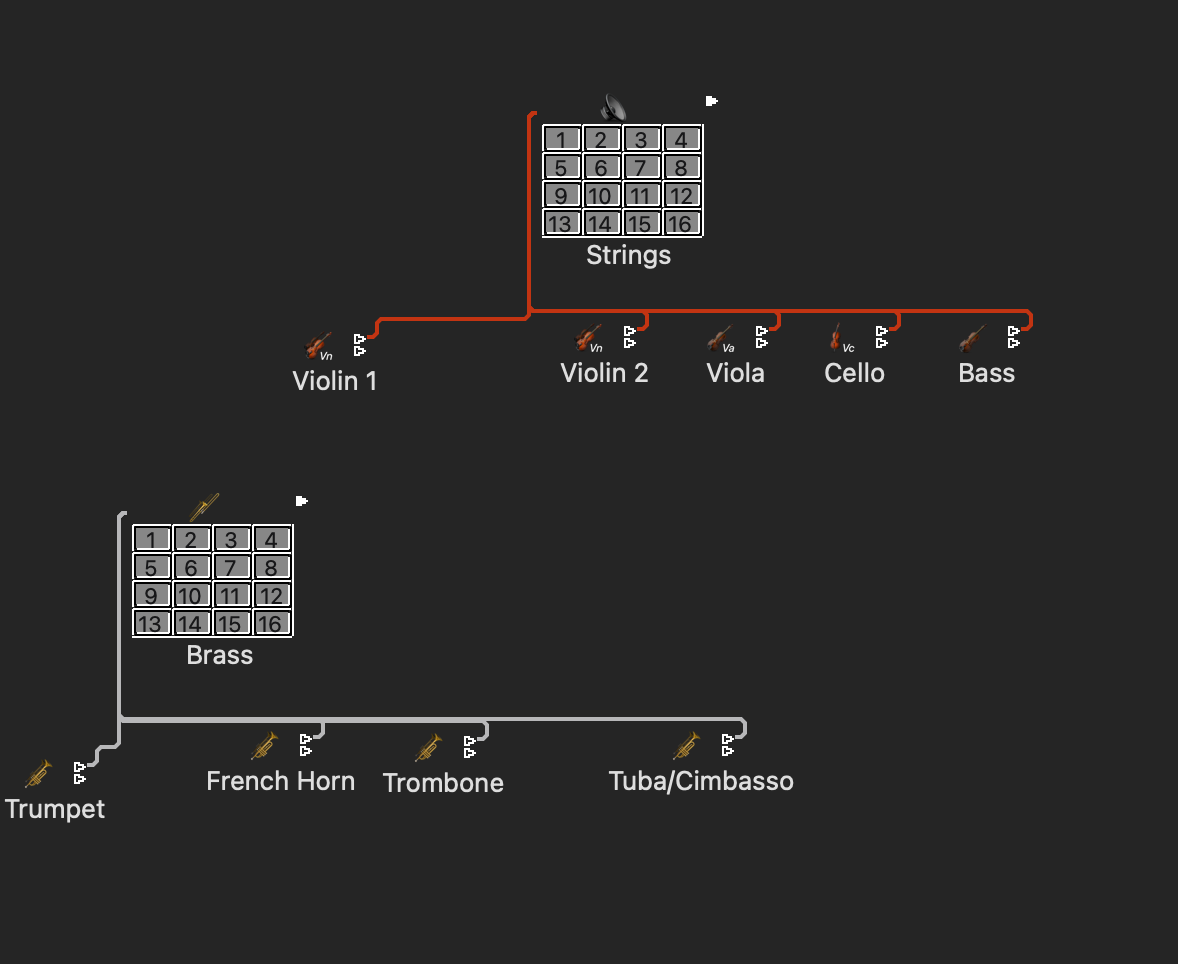
This is a typical setup:

The destination for the multi’s is the PC over the Bome network.

Nevertheless, it’s impractical to have all instruments in arrange without a midi port. Sometimes you have to use it because of the external instrument plugin in Logic. Setting it up this way does make it easier to reassign ports if things go south. But it is a major major hassle, and its not just the issue of recovering, but also changes in configuration.

Interesting but I’m not going to claim that I understand your diagrams except perhaps that you will be switching devices on and off dynamically. Bome Network does not do this natively but you can set up Bome MIDI Translator Pro to dynamically map either ports or MIDI channels or both. You would need to define certain MIDI triggers to do the switching that otherwise are not meant to go through to the destination.

Steve Caldwell
Bome Customer Care
Also available for paid consulting services: bome@sniz.biz